 11
11
Canada’s industrial sector depends heavily on accurate inspections, detailed mapping, and reliable infrastructure monitoring. From hydroelectric dams and pipelines to reservoirs, bridges, ports, and industrial facilities, companies require advanced technologies to maintain safety and operational efficiency. This is where Industrial aerial drone inspection and LiDAR surveying for critical infrastructure Canada has become an essential solution for modern infrastructure management.
Industrial drone inspection and LiDAR surveying services use unmanned aerial systems equipped with high-resolution cameras, thermal sensors, and laser scanning technology to capture precise data from difficult or hazardous environments. These services allow infrastructure owners, municipalities, and industrial operators to inspect assets quickly, safely, and cost-effectively without disrupting operations.
In Canada, industries increasingly rely on advanced drone and marine robotics providers such as Ven-Tech Subsea Inspections to support complex inspection and surveying projects. By combining subsea expertise, aerial drone technology, AI-powered analytics, and precision surveying methods, companies can obtain highly accurate data for informed decision-making.
Industrial aerial drone inspections involve using remotely operated drones to examine infrastructure from above. These drones are equipped with sophisticated imaging systems capable of collecting real-time visual and thermal data in locations that may be dangerous or inaccessible to human inspectors.
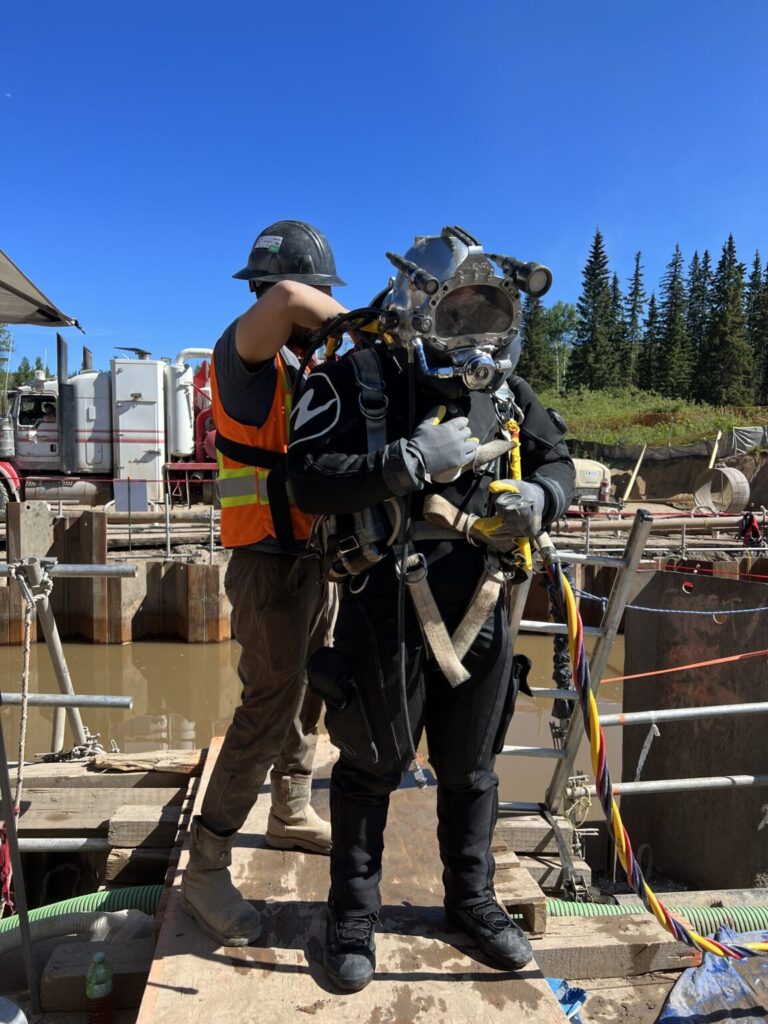
The demand for Industrial aerial drone inspection and LiDAR surveying for critical infrastructure Canada continues to grow because traditional inspection methods often involve significant costs, lengthy shutdowns, scaffolding, helicopters, or safety risks. Drones simplify the process while improving data quality and inspection speed.
Drone inspections are commonly used for:
By using aerial drones, inspectors can safely identify corrosion, cracks, structural weaknesses, leaks, erosion, and thermal anomalies before they become major problems.
LiDAR stands for Light Detection and Ranging. It is a remote sensing technology that uses laser pulses to measure distances and generate highly accurate three-dimensional maps of physical environments.
In Industrial aerial drone inspection and LiDAR surveying for critical infrastructure Canada, LiDAR-equipped drones scan terrain, structures, and infrastructure assets with incredible precision. The technology creates dense point cloud datasets that can be transformed into digital elevation models, contour maps, and 3D infrastructure models.
LiDAR surveying is especially valuable in Canadian environments where terrain, forests, snow cover, and remote locations can make traditional surveying difficult.
LiDAR surveys are commonly used for:
The accuracy of LiDAR technology allows engineers and project managers to make better operational and maintenance decisions while reducing costly errors.
One major advantage of Industrial aerial drone inspection and LiDAR surveying for critical infrastructure Canada is improved safety. Inspecting tall structures, confined spaces, underwater facilities, or hazardous industrial environments can expose workers to unnecessary risks. Drone systems eliminate many of these dangers by allowing inspections to be conducted remotely.
Another important benefit is efficiency. Traditional infrastructure inspections can require extensive manpower, equipment rentals, and operational shutdowns. Drone-based inspections can often be completed much faster while minimizing disruptions.
Additional benefits include:
Modern drones capture ultra-high-definition imagery and LiDAR datasets with exceptional precision. This allows engineers to detect minor defects early and monitor infrastructure conditions over time.
Drone inspections reduce the need for scaffolding, rope access teams, cranes, helicopters, and prolonged shutdown periods. This leads to significant cost savings for industrial operators.
Large infrastructure inspections that once took weeks can now be completed in days or even hours using aerial drones and automated data collection methods.
LiDAR surveying helps organizations monitor shoreline erosion, sediment movement, vegetation growth, and environmental changes affecting infrastructure systems.
Canada’s vast geography and harsh weather conditions make infrastructure monitoring especially challenging. This is why Industrial aerial drone inspection and LiDAR surveying for critical infrastructure Canada has become increasingly important across multiple sectors.
Municipalities use drone inspections to monitor water treatment facilities, reservoirs, sewer systems, and bridges. Early defect detection helps prevent infrastructure failures and reduces repair costs.
Pipelines and energy facilities require regular inspections to ensure compliance and operational integrity. Drone systems can safely inspect long pipeline corridors and detect leaks or thermal irregularities.
Hydroelectric dams and reservoirs require detailed inspections to maintain structural safety. Combining aerial drones with subsea robotics provides a complete inspection solution above and below water.
Marine infrastructure such as docks, ports, and underwater structures benefits from integrated aerial and subsea inspection technologies. Companies like Ven-Tech Subsea Inspections specialize in these complex inspection environments using ROV systems, hydrographic surveys, and advanced drone technologies.
Modern drone inspection services now incorporate artificial intelligence and automated analytics to improve reporting accuracy and efficiency. AI-powered software can analyze imagery, detect anomalies, and identify structural concerns much faster than manual review methods.
For companies operating in remote Canadian regions, integrating aerial drones with marine robotics and subsea inspection systems creates a comprehensive infrastructure assessment strategy. This integrated approach supports safer operations, predictive maintenance planning, and long-term asset management.
As infrastructure systems continue to age across Canada, the demand for intelligent inspection technologies will only increase. Industries are recognizing that proactive inspections help avoid catastrophic failures and reduce long-term maintenance expenses.
The growing importance of Industrial aerial drone inspection and LiDAR surveying for critical infrastructure Canada reflects the need for safer, faster, and more accurate infrastructure monitoring solutions. Drone inspections and LiDAR mapping provide critical insights for municipalities, utilities, industrial operators, and marine infrastructure managers across Canada.
By leveraging advanced aerial systems, AI-powered analytics, and precision surveying technologies, companies can improve infrastructure reliability while reducing operational risks and costs. Organizations such as Ven-Tech Subsea Inspections continue to lead the industry by combining commercial diving expertise, subsea robotics, hydrographic surveys, and innovative drone inspection services to deliver dependable results in even the most challenging environments.